

• 05 June 2026, 22:31 PM

Tag Archives: workplace recovery

office working

Reality remains in the office

Working from home – the new normal or the new risk?

So, working from home is the new normal – right? We’ll never go to the office again – really?  The kitchen worktop or the chest of drawers in the spare bedroom makes for a great office – yes?  The kids screaming– isn’t an issue, the cat/dog pawing at your leg doesn’t intrude on your train of thought or interrupt the flow of the important client meeting on Zoom or Teams?  All is sweet then – carry on!

If you’re fortunate to have an office at home you may be spared some of these intrusions….  but note….. it’s an ‘office’.  For most, the home ‘office’ is a ‘make do’.  ‘Make do’s are either a pain or a novelty that eventually become a pain.  ‘Make do’ spaces are often a borrowed resource with such borrowing sometimes lasting only minutes.

The current crisis is sure to bring about some changes but, is going to the ‘real’ office a thing of the past?  For many reasons, we think it unlikely – although for sure, on the back of the novelty factor, the ‘we-can-work-from-home’ brigade , which range from those counting the pennies (believing it will save a fortune) to those with imaginations of a paradise, will strive to prove it is the new normal.

So why do we think the ‘real’ office is still here for a while longer……

Well for one, the majority of businesses are technically not ready.  Cyber criminals, though, are very ready!  The ‘real office’ may be well firewalled but, the likelihood of this extending to the home office, is small.  Wrapped within pages of GDPR legislation, businesses have many legal obligations for securing  data – especially that which is personal.  Aside the possibility of all company data being encrypted and ransoms demanded, those that flout the regulations can be heavily fined and Directors held accountable.    Home working – is it the new normal or is it the new  risk – a very big risk!
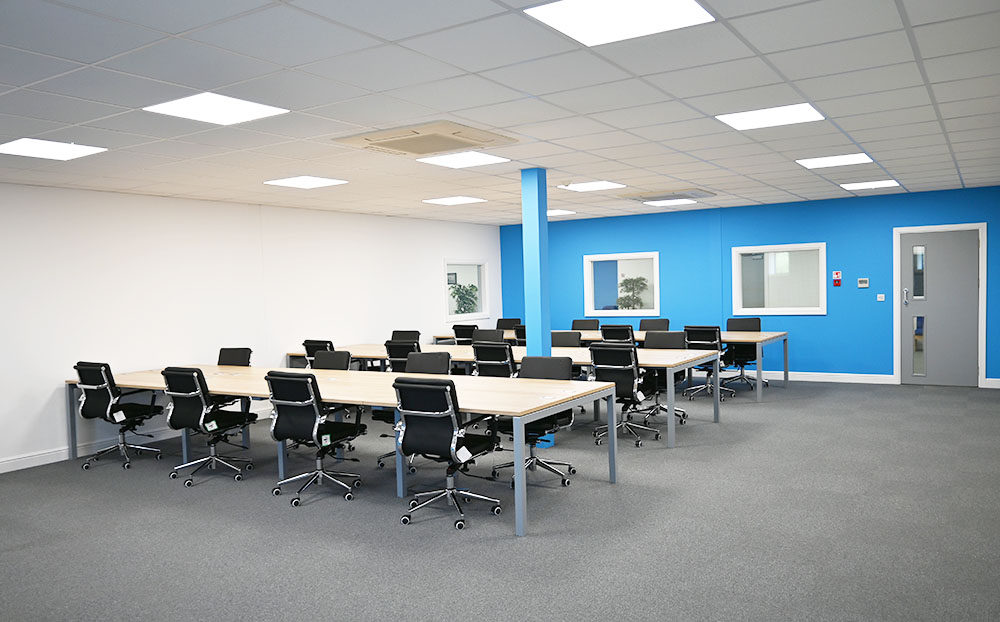


Workplace Recovery Suite

5 things to consider in a workplace recovery plan

A workplace recovery plan will build resilience into your business, and prove to your staff and clients that you’re serious about keeping your business alive in the event of a disaster.

But what does a good plan look like? Here are five important factors you should consider:

  1. 24/7 access

A business continuity workarea recovery site which isn’t accessible 24 hours a day is something you want to avoid. While it’s easy enough to find a site that you can access during normal working hours, you should also consider the wider impact of a disaster scenario. You may, for example, need to use the disaster recovery (DR) site out of hours during a disruptive incident. Moving kit and people in the early hours is hard enough without the added issues of access.

  1. Facilities

When disaster strikes it’s easy to get caught up in the bigger picture and forget about the everyday resources your office needs to function. We’re not talking about servers and desktops but the smaller items that make life easier – like cables, phone chargers and even stationery – as well as a way of storing them.
The presence of local amenities and accommodation are also easily overlooked, but could be of great significance to you and your staff if you have to stay at the site for many weeks.

  1. Staff support

The top priority for most firms is the well-being of their staff. This was confirmed in a recent survey carried out by the Business Continuity Institute (BCI), which found that 90% of practitioners put staff safety before other factors, such as security of critical data, customer support and productivity.
Having a team of professionals at hand who can deliver a smooth transition for your business when you most need it is invaluable. Your workplace recovery provider should be committed to making your move into a backup office location as easy and uncomplicated as possible, especially during the initial stages following an incident.

  1. Security and privacy

In an ideal world you’d want your business continuity work area to be a replica of your current office. Of course, this isn’t always possible – which is why it’s important to concentrate on your core requirements. One such requirement may be a high level of security and privacy. For example, if you’re working with sensitive or regulated data you may decide that a shared space is simply out of the question for your business.

  1. Scalability

Many companies make the mistake of not thinking ahead; it’s important to consider your medium and long-term needs, not just the must-haves in the aftermath of an unexpected event.
Depending on issues such as permanent damage to your original premises, you may find that you need to stay in your backup site for longer than originally anticipated and that your requirements change over time.
Your plan should therefore include details on how many workplace recovery positions you require in a disaster scenario over a period of time, as well as how long you can reside there