• 18 April 2026, 11:21 AM

Category Archives: Hosting & Colocation

Modern IT Landscape

The Modern IT Landscape: Technical Challenges Facing Businesses in 2026

he current IT environment is defined by rapid innovation, but also by compounding complexity, expanding attack surfaces, and operational fragility. Businesses are no longer simply “using IT”—they are entirely dependent on it. As a result, infrastructure decisions now directly determine resilience, security posture, regulatory compliance, and ultimately commercial survival.

Below is a deep technical breakdown of the most pressing challenges organisations face today.


1. Cloud Complexity and Misconfiguration Risk

The shift to hybrid and multi-cloud architectures has created distributed, fragmented infrastructure models that are inherently difficult to secure and manage.

  • Cloud adoption continues to accelerate, driven by scalability and AI workloads
  • However, misconfigurations remain the dominant cause of breaches, with poorly secured storage, IAM policies, and exposed services acting as entry points
  • Recent findings show up to 80% of cloud breaches stem from basic configuration errors

Technical Reality

Modern environments include:

  • Multi-cloud (AWS, Azure, private cloud)
  • Kubernetes / container orchestration layers
  • CI/CD pipelines with embedded secrets
  • API-driven microservices

Each layer introduces:

  • Identity sprawl (users, service accounts, tokens)
  • Policy inconsistency across platforms
  • Limited visibility into east-west traffic

Implication

Without centralised governance, continuous configuration monitoring (CSPM), and identity control, organisations are operating with unknown exposure risk.

DSM Alignment

A properly architected colocation plus private cloud hybrid model, supported by managed services, allows:

  • Deterministic control over infrastructure
  • Reduced reliance on hyperscaler complexity
  • Secure segmentation and predictable performance

2. Explosion of Attack Surface and Identity-Based Threats

The traditional network perimeter is effectively gone. Modern environments are defined by identity, not location.

  • Machine identities (APIs, certificates, service accounts) now vastly outnumber humans
  • Credential theft accounts for a growing proportion of breaches, with sharp increases in compromised identities

Technical Reality

Attack vectors now include:

  • Stolen API tokens from CI/CD pipelines
  • Compromised service accounts with excessive privileges
  • Lateral movement via poorly segmented networks
  • Abuse of OAuth and federated identity systems

Traditional controls such as firewalls and VPNs are ineffective against:

  • Authenticated attackers
  • Insider threats
  • Compromised machine identities

Implication

Security must move toward:

  • Zero Trust Architecture (ZTA)
  • Continuous authentication and behavioural monitoring
  • Least privilege access enforced dynamically

DSM Alignment

This is where managed cybersecurity services become critical:

  • Identity governance and privileged access management
  • Network segmentation within controlled data centre environments
  • SIEM and XDR monitoring with real-time threat detection

3. AI-Driven Threat Acceleration

Artificial Intelligence is now both a defensive tool and a threat multiplier.

  • The majority of organisations are using AI, significantly expanding attack surfaces
  • AI enables attackers to automate phishing campaigns, malware generation, and reconnaissance

At the same time:

  • AI systems introduce new trust boundaries
  • Autonomous agents can interact with systems without human validation

Technical Reality

AI introduces:

  • Unstructured data exposure risks
  • Model poisoning and prompt injection vulnerabilities
  • API-level attack surfaces
  • Autonomous decision-making risks

Implication

Security models must evolve to:

  • Treat AI agents as identities
  • Enforce strict access controls and audit trails
  • Monitor behaviour, not just signatures

DSM Alignment

A secure, controlled hosting environment rather than uncontrolled public AI integrations enables:

  • Data sovereignty
  • Controlled AI workload deployment
  • Reduced exposure to external threat vectors

4. Data Centre Demand, Power Constraints, and Sustainability Pressure

The backbone of IT, data centres, is under unprecedented strain.

  • Global demand for data centre capacity is expected to triple by 2030
  • Power consumption is rising dramatically, becoming a primary constraint
  • Data centres are now considered critical national infrastructure in the UK

Technical Reality

Operators face:

  • Power density challenges from AI workloads such as GPU clusters
  • Cooling inefficiencies between air and liquid systems
  • Grid constraints and energy pricing volatility
  • ESG and carbon reporting requirements

Implication

Businesses must consider:

  • Where workloads are hosted
  • Energy efficiency of infrastructure
  • Long-term sustainability commitments

DSM Alignment

Facilities designed with:

  • Water cooling and energy-efficient systems
  • Renewable energy integration such as solar
  • Scalable high-density rack capability

…provide both cost control and ESG alignment, which is increasingly a commercial requirement.


5. Regulatory Pressure and Data Sovereignty

Governments are tightening control over data location, cyber resilience, and supply chain security.

  • There is increasing focus on digital sovereignty and reducing reliance on foreign hyperscalers
  • New legislation is driving higher standards for critical infrastructure protection

Technical Reality

Organisations must now manage:

  • Data residency requirements
  • Encryption and key ownership
  • Third-party risk including supply chain attacks
  • Auditability and compliance reporting

Implication

Public cloud alone is often insufficient for:

  • Sensitive workloads
  • Regulated industries
  • Long-term compliance strategy

DSM Alignment

UK-based data centre and IT services provide:

  • Sovereign infrastructure control
  • Compliance-ready environments aligned to recognised standards
  • Reduced exposure to geopolitical and vendor risk

6. Operational Resilience and Disaster Recovery Gaps

Modern businesses must assume breach or failure is inevitable.

  • Focus is shifting from prevention to resilience and recovery
  • Many organisations still lack tested disaster recovery plans and reliable backup strategies

Technical Reality

Common weaknesses include:

  • Backups stored in the same environment as production
  • Unverified recovery processes
  • Lack of orchestration for failover
  • Inadequate ransomware recovery strategies

Implication

Downtime is no longer just operational. It is financially catastrophic, reputationally damaging, and potentially a regulatory failure.

DSM Alignment

Robust Disaster Recovery as a Service solutions deliver:

  • Defined recovery objectives such as 15-minute RPO
  • Offsite, immutable backups
  • Rapid failover capability
  • Full business continuity assurance

7. Skills Shortage and Tool Sprawl

Even well-funded organisations struggle with execution.

  • Security teams are overwhelmed by alert fatigue, tool fragmentation, and skills shortages
  • Many organisations operate numerous disconnected security tools, creating silos and blind spots

Technical Reality

This leads to:

  • Slow incident response
  • Inconsistent policy enforcement
  • Increased mean time to detect and respond

Implication

Technology alone is not the solution. Integration and expertise are critical.

DSM Alignment

Managed IT and security services provide:

  • Consolidated tooling and visibility
  • Experienced technical and security professionals
  • Continuous monitoring and response capability

Complexity to Control

The overarching challenge facing businesses today is not any single technology. It is the convergence of all of them.

Cloud, AI, identity, regulation, infrastructure, and evolving threats are individually manageable, but collectively overwhelming.

The organisations that succeed will be those that:

  • Regain control over their infrastructure
  • Simplify architecture where possible
  • Embed security at every layer
  • Prioritise resilience over theoretical perfection

This is where a fully integrated approach combining data centre, IT services, and cybersecurity becomes essential rather than optional.

62b6539c 01dc 4d5a 8445 3d8fedc647d9

Sustainability and Data Storage: Why It Matters More Than Ever

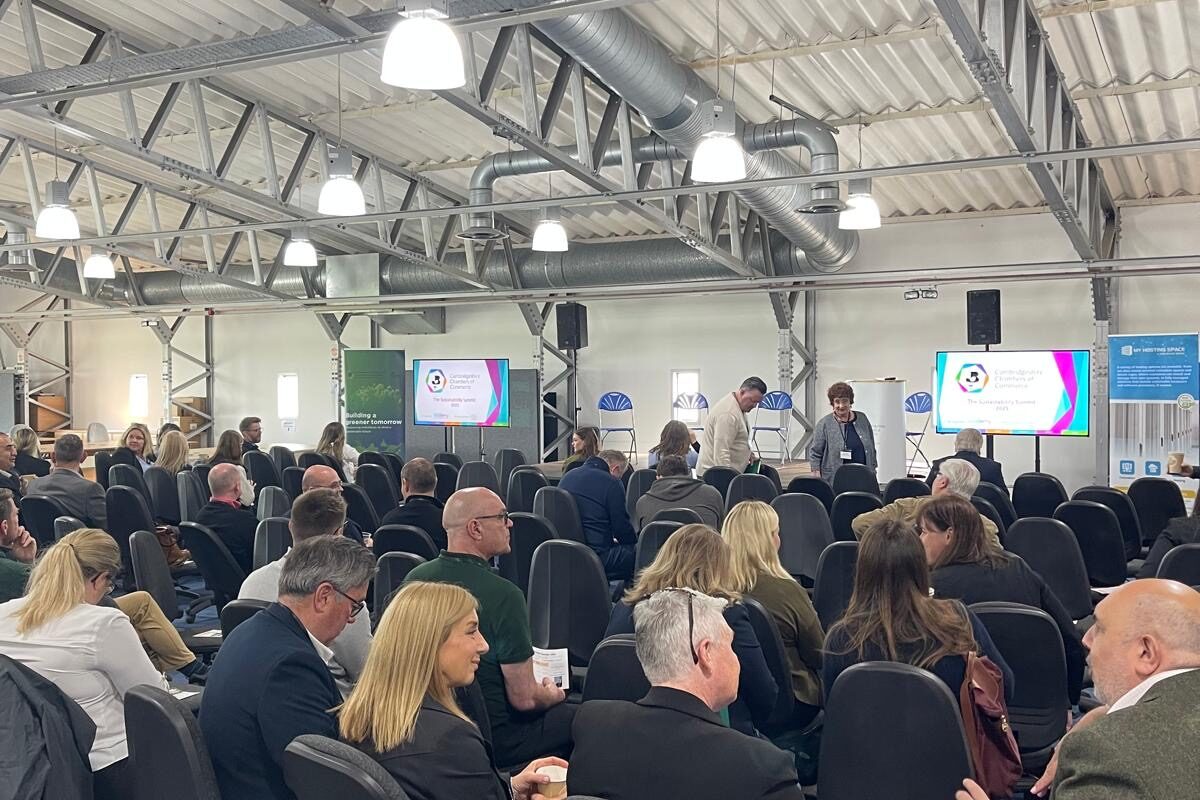
Last week, we were proud to host a Sustainability Summit alongside the Cambridgeshire Chamber of Commerce at our state-of-the-art DSM ESG Data Centre. Bringing together local businesses, sustainability advocates, and technology leaders, the event sparked important conversations around the intersection of environmental responsibility and digital infrastructure.

As businesses across every sector move increasingly into the digital world, sustainable data storage and management are becoming critical. It’s no longer enough to ask how your data is protected — it’s also time to ask at what environmental cost?

Why Sustainable Data Centres Matter

Data centres are essential for modern business operations, but traditional facilities can be enormous consumers of energy and water. Globally, data centres account for approximately 1–2% of all electricity use, and with data consumption only increasing, that figure is set to rise.

Choosing a data partner committed to Environmental, Social, and Governance (ESG) principles helps businesses:

  • Reduce their carbon footprint
  • Meet sustainability targets and regulatory requirements
  • Demonstrate responsible supply chain management to stakeholders
  • Drive positive change across industries

At the Summit, it was clear: businesses want to be part of the solution. But not all data centres are created equal.

DSM’s ESG Data Centre: Leading the Way

At DSM Group, sustainability is not an afterthought — it’s built into our DNA. Our ESG Data Centre, located in Cambridgeshire, has been developed from the ground up to minimise environmental impact without compromising performance, security, or reliability.

Here’s how we do it differently:

  • Onsite Cooling Lake: Naturally cools equipment without relying solely on energy-intensive mechanical cooling, significantly reducing power usage.
  • Water-Cooled Racks: Our cutting-edge cooling technology improves energy efficiency and extends equipment life.
  • 200kW Solar Farm: Our own solar installation powers a large portion of our operation, reducing reliance on the grid and lowering carbon emissions.
  • Nature Reserve: We’re actively rewilding land around the site, supporting local biodiversity, and ensuring that the land we operate on gives back more than it takes.
  • Sustainability First Design: From construction materials to waste management, every aspect of our facility has been engineered with ESG principles in mind.
  • ISO 27001:2022 Accredited: Security is never compromised — we’re certified to the latest international standards for information security.

When you’re selecting a data storage or backup partner, look beyond the price tag. Consider their:

  • Energy sources and consumption
  • Cooling methods
  • Carbon reduction commitments
  • Social responsibility initiatives
  • Governance and security practices

Partnering with an ESG-driven provider like DSM allows you to safeguard your data and your sustainability credentials at the same time.

Chamber Members Offer: 20% Off Data Backup for 12 Months

As a thank you to everyone who attended the Sustainability Summit — and to support local businesses committed to sustainable growth — we’re delighted to offer Cambridgeshire Chamber of Commerce members 20% off data backup services for the first 12 months when signing up as a new customer.

Our data backup services offer:

  • Fully UK-based storage
  • 24/7 support
  • Military-grade encryption
  • Flexible, scalable solutions to fit businesses of all sizes

Secure your data. Support the planet. Save money.
Contact us today to find out more and take advantage of this limited-time offer.

Managed Services

6 Benefits Of Using Managed IT Services

“By giving IT staff more time to focus on progression and increasing productivity, a managed IT supplier offers businesses the support and room they need to grow.”

While new technologies present powerful opportunities for enterprises, they also introduce challenges. The pace of change in IT is unprecedented. IT departments can no longer survive on one or two computer models, a single operating system, and a short list of approved applications. The mobile devices and cloud-based technologies that have brought so much possibility have also introduced a multitude of devices, platforms and apps for IT departments to manage and secure.

For many organisations those challenges add up to significant expense: the cost of hiring and training qualified workers, purchasing the infrastructure to support emerging technologies, and keeping systems up to date. Rather than struggle to keep pace with technology, many organisations turn to managed IT providers for help. By trusting a third party such as DSM to handle cloud deployments, data center solutions, mobile initiatives, collaboration tools and security, organisations can focus their time and resources on their core business objectives.

IT service providers take a pragmatic approach to IT solutions resulting in a higher standard than many organisations are able to achieve in-house. Top service providers also offer ongoing management and maintenance of the underlying infrastructure, along with end-user support and service guarantees.

The benefits of managed IT services are clear: In 2014, only 30 percent of organisations used managed services, but within a year, that figure had nearly doubled. Managed services can cut IT costs by as much as 40 percent while doubling operational efficiency.

Turning to a trusted IT partner offers several advantages, including:

1. Freeing up IT staff

Most internal IT departments are at capacity. Outsourcing back-end functions or complex, rapidly changing technologies to a managed service provider, organisations can dedicate their in-house technology experts to projects that will further their core objectives and promote innovation.

2. Keeping pace with the demands for IT expertise

Organisations around the UK are struggling to fill IT positions, particularly in cybersecurity and cloud solutions. Outsourcing these functions to a partner with technically skilled and specialized engineers in new and emerging technologies alleviates these pressures.

3. Greater scalability

IT organisations spend weeks, even months, deploying massive systems. Many organisations are finding it more effective to start small, move fast and expand as needed. DSM’s modular approach to managed services makes it easy for enterprises to scale up or down depending on demand, such as a retailer increasing capacity around peak periods or a startup experiencing sudden growth.

4. 24/7 availability

The 9-to-5 workday is as outdated today as the phone booth. When users work around the clock, so must the network. With a managed IT provider, help is always available — days, nights, weekends or holidays — to support users.

5. Shifting the burden of compliance

In addition to regular audits, many organisations are obligated to meet standards and requirements with their IT initiatives. Reporting and security are imperative in the healthcare, education, financial services and retail industries. DSM understands the regulations that organisations are bound by and can provide the systems, processes and reports to guarantee that organisations meet their requirements — without placing that burden on in-house staff.

6. Predictable monthly costs

Every IT investment comes with peripheral costs. Organisations need adequate networks, storage, and security. They must train staff, deploy systems and manage equipment. Unexpected costs arise at any time. By outsourcing initiatives to a managed IT provider, organisations can break down their costs into fixed monthly payments. Instead of the large capital expenditures that come with managing systems in-house.

To discuss your requirement or book a free IT review please contact us @ support@dsmgroup.co.uk or call 03333 22 11 00


CyberTerrorism 1

Cyberterrorism – The Silent Threat?

The business benefits of cloud computing are widely recognised but, for many organisations who have to comply with regulatory requirements, there is a need for evidence of enhanced security from their Data Centre partner.  Stolen or corrupt data can lead to loss of customers, high recovery costs and – most of all – a damaged reputation.  If an organisation is using a cloud solution they must rely on their supplier to provide the necessary level of security technology and processes.  In the Data Centre environment both physical and virtual security requirements must be demonstrated to the satisfaction of their customers.

The physical security of a data centre plays a significant role in ensuring information is kept safe.  Access to the site should be restricted to authorised people only and have round the clock surveillance.  Electronic access control systems as well as interior and exterior high resolution CCTV is a must and Data Centre managers must ensure that security is not compromised by failure of resources such as electricity.

Not only must the site be physically secure, the network infrastructure must also be safe from unauthorised penetration.  The scope of system security in the Data Centre should include security policies and practices, firewall protection, anti-virus software and continuous monitoring for incidents.  Automated solutions can be used to detect security breaches and to replicate data for regulatory compliance requirements.

“Data Centre security is of vital importance.  It’s up to the owner to ensure that the infrastructure is safe and all security procedures are fully documented and rigorously followed.   This allows our clients to focus on their core business without having any concerns over the safety of their data,” said John Morton, Sales Director, DSM.

New solutions are being introduced constantly to counter threats and meet compliance requirements in web application security and data security.  There is a wide range of security ‘add-ons’ including alerts to network events and real-time visibility into routing and traffic anomalies.  Many Data Centres are now using smart monitoring features such as Intrusion Detection which quickly identifies and alerts if human attackers, network worms or bots are attempting to compromise the system.

Only by ensuring their Data Centre partners are well protected and incorporating the latest security technologies can organisations be confident that their data remains safe.

colocation-hosting

Benefits of Colocation

Why Colocation?

Over the last few years you will certainly have noticed the rise of technology – how it is becoming increasingly part of our daily lifestyle, oh, and this thing called the Internet.  Well, as this has all been growing around us, protecting our data and access to our applications has become an even more vital part of business operations.  The Internet has led to the introduction of Cloud computing which is one of the most popular ways of managing data and business processes. However, many organisations have recognised that Cloud solutions may not be secure or reliable enough for their needs, especially if they operate in a regulated industry.

This is why Colocation is still a highly popular and effective solution as you can partner with a company who specialises in hosting your equipment in a secure and robust environment with full accountability for ensuring your data is not lost or compromised.  As a company that offers colocation, we would like to suggest a few reasons why it may be the best solution for your business:

Stability
First of all, stability is really the main reason people use Colocation. If your premises are hit by a disaster such as flood or a fire (though unlikely, it is possible and something you should plan for) then your data can still be accessed and recovered. Data centres used for colocation should have full resilience for power to eliminate downtime.

Security
Not only is your data not vulnerable to events in your premises, it is safe. Typically, companies that offer colocation services operate to high levels of security to ensure only authorised personnel can access your information.

Connectivity
Providers of colocation services ensure that your equipment is hosted in a controlled environment with high bandwidth speed so your equipment will run smoothly and efficiently. It is far more cost effective to use a colocation provider than to create such conditions in your own premises.

Money
Though there is no guarantee that using a colocation solution will increase your revenue, it will definitely save you money.  This saving could be re-invested in your business to grow income and profits, so there’s really no down side to this as you’re saving money either way.

So if you are not already using a colocation solution, why not consider it? DSM is a specialist company based just outside Peterborough offering a range of services such as colocation, managed hosting, system recovery and IT support to companies across the UK.

For more information on how we can help your business, please feel free to check out our Twitter pages or contact us on 03333 221100.