
• 05 June 2026, 20:12 PM

Tag Archives: cloud backup

backup

Your Backup Is Potentially Useless. Here’s Why.

Most organisations believe they are protected because they have backups in place.

They tick the box.
They pass audits.
They assume they are covered.

But in reality, backups alone do not protect your business.

They protect your data.

And those are not the same thing.


The Misconception: Backup = Recovery

A backup strategy answers one question:

“Can we retrieve our data?”

But business continuity depends on a completely different question:

“How quickly can we operate again?”

That gap between data recovery and operational recovery is where most failures happen.


What Actually Happens During an Incident

Let’s take a realistic scenario:

A ransomware attack encrypts your systems at 09:00.

You have backups. Good.

Now what?

Step 1: Identify the breach

Hours can pass before the full scope is understood.

Step 2: Isolate affected systems

You cannot restore safely until the threat is contained.

Step 3: Validate backups

Are they clean? Are they recent? Are they complete?

Step 4: Begin restoration

This is where most assumptions break.

Large datasets take hours or days to restore
Infrastructure must be rebuilt or reconfigured
Dependencies between systems cause delays

Step 5: Test systems

You cannot bring systems live without validation.

Step 6: Restore user access

Staff still need:
Devices
Network access
Applications
Secure authentication

At this point, even with good backups, many businesses are still offline for days.


The Real Problem: Recovery Time

This is where two critical metrics come into play:

Recovery Time Objective (RTO)

How long it takes to restore operations.

Recovery Point Objective (RPO)

How much data you can afford to lose.

Most organisations focus heavily on RPO, which relates to backups.

But it is RTO that determines whether your business survives.

Because:

A 24 hour outage means lost revenue
A 72 hour outage means lost customers
A week long outage can mean potential business failure


Why Backups Fail in Practice

Backups do not fail because they do not exist.

They fail because they are incomplete as a strategy.

1. No Infrastructure to Recover Into

Backups need a target environment.

Without:
Pre configured servers
Network infrastructure
Security controls

You are rebuilding from scratch.


2. No Defined Failover Process

Most organisations do not have a clear, tested sequence for switching operations.

Instead, recovery becomes:
Reactive
Manual
Slow


3. No Workplace Recovery Plan

Even if systems are restored:

Where do staff work?
How do they access systems?
What happens if the office is unavailable?

This is one of the most overlooked risks.


4. No Testing Under Real Conditions

A backup that has never been tested is a theoretical solution.

Under pressure:
Scripts fail
Dependencies break
Teams do not know their roles

Testing exposes reality.

Most organisations avoid it.


What Real Business Continuity Looks Like

A proper strategy goes far beyond backup.

It includes:

1. Replicated Infrastructure

Not just stored data, but ready to run environments.

2. Defined Recovery Processes

Clear, documented, and rehearsed.

3. Rapid Failover Capability

The ability to switch operations in minutes, not days.

4. Workplace Recovery

Ensuring people, not just systems, can function.

5. Regular Testing

Simulating real world failure scenarios.


Backup Is One Piece of a Larger System

Backups are still essential.

But they are just one component in a broader resilience strategy.

Without the surrounding infrastructure and planning, they create a false sense of security.


The Question Most Businesses Avoid

It is easy to ask:

“Do we have backups?”

It is much harder, and more important, to ask:

“How long could we realistically operate without our systems?”

Because that answer defines your actual level of risk.


Final Thought

Technology failures do not usually destroy businesses.

Downtime does.

And downtime is not solved by backups alone.


If you have never tested your recovery under real conditions, you do not truly know your risk.

It might be worth asking:

How long could your business actually survive offline?
Talk to us about real world backup and recovery.

    Please prove you are human by selecting the plane.

    Modern IT Landscape

    The Modern IT Landscape: Technical Challenges Facing Businesses in 2026

    he current IT environment is defined by rapid innovation, but also by compounding complexity, expanding attack surfaces, and operational fragility. Businesses are no longer simply “using IT”—they are entirely dependent on it. As a result, infrastructure decisions now directly determine resilience, security posture, regulatory compliance, and ultimately commercial survival.

    Below is a deep technical breakdown of the most pressing challenges organisations face today.


    1. Cloud Complexity and Misconfiguration Risk

    The shift to hybrid and multi-cloud architectures has created distributed, fragmented infrastructure models that are inherently difficult to secure and manage.

    • Cloud adoption continues to accelerate, driven by scalability and AI workloads
    • However, misconfigurations remain the dominant cause of breaches, with poorly secured storage, IAM policies, and exposed services acting as entry points
    • Recent findings show up to 80% of cloud breaches stem from basic configuration errors

    Technical Reality

    Modern environments include:

    • Multi-cloud (AWS, Azure, private cloud)
    • Kubernetes / container orchestration layers
    • CI/CD pipelines with embedded secrets
    • API-driven microservices

    Each layer introduces:

    • Identity sprawl (users, service accounts, tokens)
    • Policy inconsistency across platforms
    • Limited visibility into east-west traffic

    Implication

    Without centralised governance, continuous configuration monitoring (CSPM), and identity control, organisations are operating with unknown exposure risk.

    DSM Alignment

    A properly architected colocation plus private cloud hybrid model, supported by managed services, allows:

    • Deterministic control over infrastructure
    • Reduced reliance on hyperscaler complexity
    • Secure segmentation and predictable performance

    2. Explosion of Attack Surface and Identity-Based Threats

    The traditional network perimeter is effectively gone. Modern environments are defined by identity, not location.

    • Machine identities (APIs, certificates, service accounts) now vastly outnumber humans
    • Credential theft accounts for a growing proportion of breaches, with sharp increases in compromised identities

    Technical Reality

    Attack vectors now include:

    • Stolen API tokens from CI/CD pipelines
    • Compromised service accounts with excessive privileges
    • Lateral movement via poorly segmented networks
    • Abuse of OAuth and federated identity systems

    Traditional controls such as firewalls and VPNs are ineffective against:

    • Authenticated attackers
    • Insider threats
    • Compromised machine identities

    Implication

    Security must move toward:

    • Zero Trust Architecture (ZTA)
    • Continuous authentication and behavioural monitoring
    • Least privilege access enforced dynamically

    DSM Alignment

    This is where managed cybersecurity services become critical:

    • Identity governance and privileged access management
    • Network segmentation within controlled data centre environments
    • SIEM and XDR monitoring with real-time threat detection

    3. AI-Driven Threat Acceleration

    Artificial Intelligence is now both a defensive tool and a threat multiplier.

    • The majority of organisations are using AI, significantly expanding attack surfaces
    • AI enables attackers to automate phishing campaigns, malware generation, and reconnaissance

    At the same time:

    • AI systems introduce new trust boundaries
    • Autonomous agents can interact with systems without human validation

    Technical Reality

    AI introduces:

    • Unstructured data exposure risks
    • Model poisoning and prompt injection vulnerabilities
    • API-level attack surfaces
    • Autonomous decision-making risks

    Implication

    Security models must evolve to:

    • Treat AI agents as identities
    • Enforce strict access controls and audit trails
    • Monitor behaviour, not just signatures

    DSM Alignment

    A secure, controlled hosting environment rather than uncontrolled public AI integrations enables:

    • Data sovereignty
    • Controlled AI workload deployment
    • Reduced exposure to external threat vectors

    4. Data Centre Demand, Power Constraints, and Sustainability Pressure

    The backbone of IT, data centres, is under unprecedented strain.

    • Global demand for data centre capacity is expected to triple by 2030
    • Power consumption is rising dramatically, becoming a primary constraint
    • Data centres are now considered critical national infrastructure in the UK

    Technical Reality

    Operators face:

    • Power density challenges from AI workloads such as GPU clusters
    • Cooling inefficiencies between air and liquid systems
    • Grid constraints and energy pricing volatility
    • ESG and carbon reporting requirements

    Implication

    Businesses must consider:

    • Where workloads are hosted
    • Energy efficiency of infrastructure
    • Long-term sustainability commitments

    DSM Alignment

    Facilities designed with:

    • Water cooling and energy-efficient systems
    • Renewable energy integration such as solar
    • Scalable high-density rack capability

    …provide both cost control and ESG alignment, which is increasingly a commercial requirement.


    5. Regulatory Pressure and Data Sovereignty

    Governments are tightening control over data location, cyber resilience, and supply chain security.

    • There is increasing focus on digital sovereignty and reducing reliance on foreign hyperscalers
    • New legislation is driving higher standards for critical infrastructure protection

    Technical Reality

    Organisations must now manage:

    • Data residency requirements
    • Encryption and key ownership
    • Third-party risk including supply chain attacks
    • Auditability and compliance reporting

    Implication

    Public cloud alone is often insufficient for:

    • Sensitive workloads
    • Regulated industries
    • Long-term compliance strategy

    DSM Alignment

    UK-based data centre and IT services provide:

    • Sovereign infrastructure control
    • Compliance-ready environments aligned to recognised standards
    • Reduced exposure to geopolitical and vendor risk

    6. Operational Resilience and Disaster Recovery Gaps

    Modern businesses must assume breach or failure is inevitable.

    • Focus is shifting from prevention to resilience and recovery
    • Many organisations still lack tested disaster recovery plans and reliable backup strategies

    Technical Reality

    Common weaknesses include:

    • Backups stored in the same environment as production
    • Unverified recovery processes
    • Lack of orchestration for failover
    • Inadequate ransomware recovery strategies

    Implication

    Downtime is no longer just operational. It is financially catastrophic, reputationally damaging, and potentially a regulatory failure.

    DSM Alignment

    Robust Disaster Recovery as a Service solutions deliver:

    • Defined recovery objectives such as 15-minute RPO
    • Offsite, immutable backups
    • Rapid failover capability
    • Full business continuity assurance

    7. Skills Shortage and Tool Sprawl

    Even well-funded organisations struggle with execution.

    • Security teams are overwhelmed by alert fatigue, tool fragmentation, and skills shortages
    • Many organisations operate numerous disconnected security tools, creating silos and blind spots

    Technical Reality

    This leads to:

    • Slow incident response
    • Inconsistent policy enforcement
    • Increased mean time to detect and respond

    Implication

    Technology alone is not the solution. Integration and expertise are critical.

    DSM Alignment

    Managed IT and security services provide:

    • Consolidated tooling and visibility
    • Experienced technical and security professionals
    • Continuous monitoring and response capability

    Complexity to Control

    The overarching challenge facing businesses today is not any single technology. It is the convergence of all of them.

    Cloud, AI, identity, regulation, infrastructure, and evolving threats are individually manageable, but collectively overwhelming.

    The organisations that succeed will be those that:

    • Regain control over their infrastructure
    • Simplify architecture where possible
    • Embed security at every layer
    • Prioritise resilience over theoretical perfection

    This is where a fully integrated approach combining data centre, IT services, and cybersecurity becomes essential rather than optional.

    1ad6bdec 9693 4526 a58e eb9794d3ff40

    Unlocking the Future: DSM Group’s Current Solutions and Upcoming Expansion in 2025

    As we step into 2025, DSM Group is excited to share our journey of innovation, sustainability, and growth. With a strong foundation built on cutting-edge technology and exceptional service, we’re poised to make this year one of transformative advancements. Here’s a look at our current offerings and a glimpse into our ambitious expansion plans for the future.

    Current Solutions: Elevating Standards in Colocation and Beyond

    At DSM Group, we are proud to offer a suite of solutions designed to meet the diverse needs of modern businesses:

    1. Colocation Services:
    Our colocation solutions provide businesses with secure, scalable, and sustainable infrastructure to host critical IT operations. Located within a state-of-the-art facility, our services ensure:

    • Unparalleled uptime with resilient power and cooling systems.
    • Enhanced security with 24/7 monitoring and biometric access.
    • Cost efficiency through shared resources.

    2. Workplace Recovery Services:
    With the unpredictability of today’s world, our workplace recovery services guarantee uninterrupted business operations. Offering 400 fully equipped recovery positions, four bespoke suites, an 18-seat executive boardroom, and a 50-seat conferencing suite, we ensure businesses are back up and running in no time.

    3. ESG-Focused Hosting:
    As one of the UK’s leading ESG colocation providers, our onsite cooling lake, water-cooled racks, and 200kW solar farm underscore our commitment to sustainability. These features, alongside our nature reserve, help reduce environmental impact while delivering robust and efficient hosting solutions.

    4. Data Backup and Storage:
    Our comprehensive data backup services safeguard critical business information, ensuring peace of mind and operational continuity. With advanced security measures and seamless recovery processes, your data is always protected.

    The Benefits of Partnering with DSM Group

    When you choose DSM Group, you’re not just selecting a service provider—you’re investing in a partnership built on:

    • Reliability: Our ISO27001:2022 certification exemplifies our dedication to the highest standards of information security.
    • Sustainability: From solar energy to water-efficient cooling, our solutions align with your ESG goals.
    • Proximity: With excellent transport links to London and surrounding areas, accessing our facility is quick and convenient.
    • Expertise: Our experienced team, including the key contributors who led our early recertification success, ensures your business receives unparalleled support.

    The Road Ahead: Expansion Plans for 2025

    The upcoming year marks the beginning of an exciting second phase of development at our Eco Data Centre. Starting in 2025, we will:

    • Double Our Capacity: By expanding our colocation spaces, we aim to accommodate growing demand while maintaining the highest standards of service and efficiency.
    • Enhance Sustainability Features: The second phase will include additional renewable energy projects, further reducing our carbon footprint and reinforcing our position as an ESG leader.
    • Develop the Nature Reserve: Building on our commitment to biodiversity, the nature reserve will feature new habitats, educational opportunities, and community engagement activities.
    • Introduce Advanced Services: With the expansion, we plan to integrate advanced technologies such as AI-driven monitoring and next-generation cooling systems.

    A Shared Vision for a Sustainable Future

    At DSM Group, our mission has always been to create a harmonious balance between technological excellence and environmental stewardship. The planned expansion is not just about growing our capacity—it’s about reaffirming our commitment to our clients, our community, and the planet.

    As we move forward into this new chapter, we invite you to join us on this journey. Together, we can shape a future where innovation and sustainability go hand in hand.

    Stay tuned for updates as we embark on this exciting phase of growth. For more information about our current solutions or to discuss how we can support your business, contact us today!

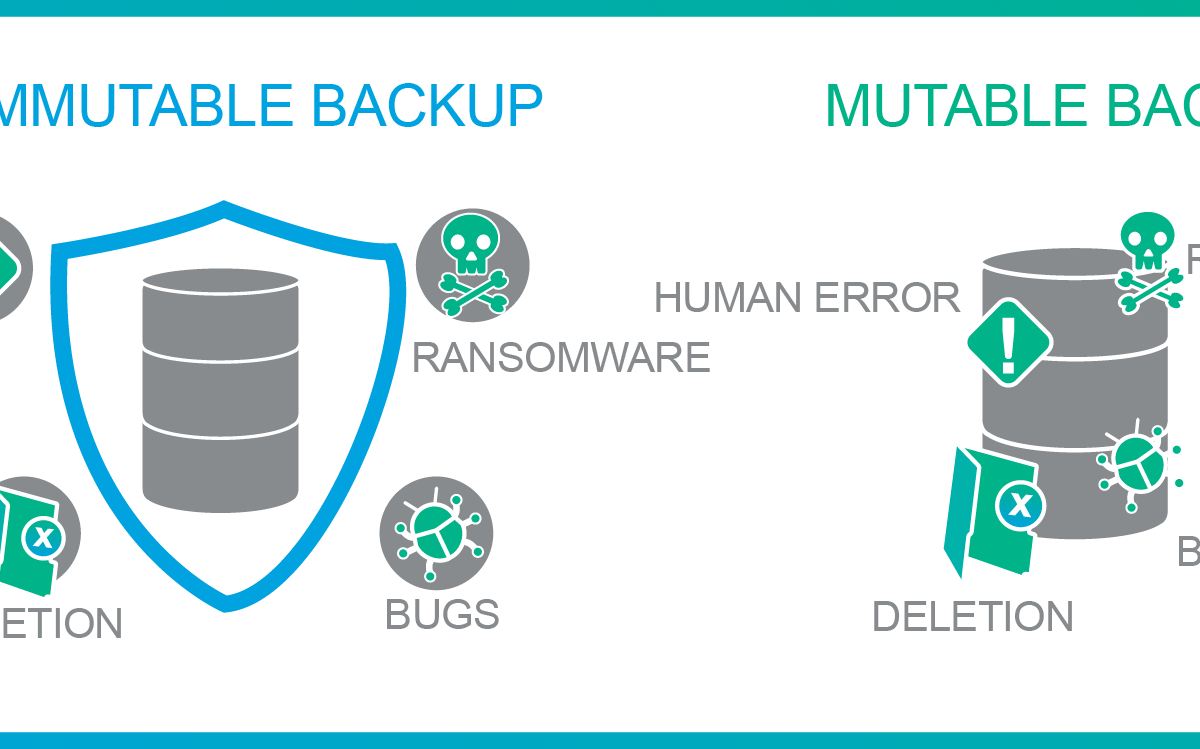
    immutable and mutable backup

    Offering Immutable Data Backup as Standard: A Game-Changer in Data Security by DSM Group

    In today’s fast-paced digital landscape, data is the lifeblood of businesses. From financial records and customer information to intellectual property and operational data, companies rely heavily on their digital assets. With the ever-increasing frequency and sophistication of cyber threats and the potential for accidental data loss, having a robust backup strategy is essential for any organisation.

    One innovative approach to data backup that has gained traction but is still far from the industry standard is “Immutable Data Backup.” Immutable data backups offer a level of data protection that goes beyond traditional backup methods, providing an added layer of security against ransomware attacks, human errors, and data corruption. While very few companies currently offer this service due to the associated infrastructure and costs, some forward-thinking organisations are breaking new ground.

    One such company is DSM Group, which has made it their mission to prioritise data security and offer immutable data backup as a standard service. Their investment in cutting-edge infrastructure, including a solar farm and a water-cooled data centre, has allowed them to provide this game-changing service to their clients without breaking the bank.

    Understanding Immutable Data Backup

    Before delving into the benefits of immutable data backup, it’s essential to understand what it entails. Immutable data backup refers to a backup method where once data is stored, it cannot be altered, overwritten, or deleted until a predefined retention period expires. In other words, it guarantees the immutability and integrity of your backup data, making it impervious to external threats or accidental data modifications.

    The Advantages of Immutable Data Backup

    1. Ransomware Resilience: Ransomware attacks have become increasingly prevalent and sophisticated. Attackers often target backups, rendering them useless and leaving victims with no option but to pay a ransom. Immutable data backups are immune to such attacks, as the data remains unalterable, regardless of external interference.
    2. Data Integrity: In a world where data integrity is paramount, immutable backups provide assurance that your data will remain unchanged, ensuring its accuracy and reliability for compliance and auditing purposes.
    3. Protection Against Human Errors: Accidental data deletion or modification is a common cause of data loss. Immutable backups safeguard against these mistakes, guaranteeing the ability to restore your data to its original state.
    4. Historical Data Retrieval: Immutable backups preserve historical versions of data, enabling organisations to recover files or records from any point in time. This can be invaluable for investigating incidents or tracking changes over time.
    5. Peace of Mind: Knowing that your critical data is secure and immutable can offer peace of mind to business owners and IT professionals, allowing them to focus on strategic initiatives rather than worrying about data loss.

    The Slight Space Requirement and Cost

    One consideration to keep in mind when adopting immutable data backup

    is that it typically requires approximately 20% more storage space compared to traditional backup methods. While this might lead to concerns about increased costs, it’s essential to emphasise that the additional storage cost is minimal when weighed against the substantial benefits of data security and protection against potential data breaches or loss.

    The investment in the extra storage space for immutable backups is a proactive measure that ensures the integrity and availability of your critical data. In the grand scheme of data security, this added expense is a small price to pay for the peace of mind and resilience it offers against cyber threats and data disasters.

    Overcoming the Cost and Infrastructure Challenge

    The primary reason many companies have yet to adopt immutable data backup as a standard service is the perceived cost and infrastructure required. However, forward-thinking organisations like DSM Group have found innovative solutions to overcome these challenges.

    By investing in renewable energy sources, such as a solar farm, and developing an efficient water-cooled data centre, DSM Group has managed to significantly reduce operational costs. These investments not only make their data centre environmentally friendly but also allow them to pass on cost savings to their clients, making immutable data backup an affordable option.

    Making Immutable Data Backup Accessible to All

    The move toward offering immutable data backup as a standard service is a significant step in enhancing data security for businesses of all sizes. While the infrastructure and costs may have been barriers in the past, companies like DSM Group are demonstrating that it’s possible to overcome these challenges.

    In an era when data breaches and cyber threats are a constant concern, investing in immutable data backup is a proactive approach that can protect your organisation’s most valuable asset: its data. As more companies recognise the importance of this service, it may become an industry standard, ensuring that businesses are better equipped to safeguard their digital assets in an increasingly volatile digital landscape.

    In conclusion, immutable data backup is a game-changer in data security, and DSM Group is leading the way by making it accessible and affordable to their clients. As businesses continue to prioritise data protection, immutable backups may soon become the gold standard for safeguarding critical digital assets. The minimal cost of additional storage space pales in comparison to the invaluable protection it provides for your data.

    If you would like to know more or get a quote please call us or fill in the form below.

      data backup

      Four key reasons why you should backup your data

      Today’s world revolves around electronic data; Business simply cannot operate without it.  No data = no business.

      Data is one of the life bloods of a business; With the ever increasing risks (viruses, hackers, natural disasters, hardware failures etc.) it’s almost inevitable something will, eventually, go wrong;  It’s not an ‘if’ but more like a ‘when’. The scale of loss could be anything from a hard drive failure to a ransomware attack.

      We have created a list of the four main reasons why you should ensure your data is correctly and securely backed up.

      Hacking and ransomware

      It is estimated around half of UK businesses faced some form of cyber-security breach in 2019/20. Most of the time the firewall and/or anti-virus software will trap the attempted infiltration however…. just like some human viruses, there’s an occasional one that gets through and causes havoc.

      In extreme cases, hackers can encrypt and hold your data to ransom. If you don’t have your data backed up (effectively), the only way to recover it might be to pay them.  There is, of course, no guarantee that your data will be returned.

      Ransomware or a virus may not be specifically targeted to you – they are designed to be smart and will automatically seek the weakness in IT systems then spread further and embed themselves until the circumstances are right for maximum damage.

      The best way to negate a ransomware attack is to ensure your systems are correctly patched, firewalled and an effective data backup is in place.

      Not all data loss is malicious

      While it’s easy to think of data loss as being a purposeful act, UK government stats, indicate that the vast majority of data losses and breaches are the result of human error.

      Staff within your business have to handle your data as part of their job, so there’s always a chance of data being deleted by accident. If you don’t want your company to be detrimentally impacted by a business critical file or email that’s accidentally been deleted (or maybe purposeful by a disgruntled employee), you need an effective backup solution.

      Disasters happen

      When protecting against data loss, businesses also need to think about the safety of the hardware that stores their data. It is often more fragile than you might think.

      Disaster is often thought of as being a grand scale event eg: Fire, Flood, Explosion but, in fact, it’s often more mundane actions that cause the issues: Poor-quality electrics, leaking roof or pipe, failed air conditioning unit etc

      Without an effective backup, you can seriously risk the future of your business.

      Critical data loss destroys businesses

      Approximately 9 out of 10 companies that lose their data for more than 10 days end up filing for bankruptcy within a year. In fact, many of those businesses file for bankruptcy immediately.

      Why? The loss of data can cause significant business interruption. Most businesses simply cannot afford such downtime. Depending on the scale of the breach, a business may also be subject to regulatory fines (as a result of GDPR for example).

      Data loss can also prove catastrophically damaging to reputation. Companies can find that the cost of losing (and subsequently trying to win back) customer confidence, following data loss or theft, far outweighs the actual cost of the data loss itself.

      The faster you can get up and running again, the more likely you are to retain customer confidence. This is why an effective data backup is imperative.

      Protecting your data

      There’s a number of ways you can backup your business data however, the most recognised and effective solution is an offsite, cloud backup.  ‘Cloud’ is not a  mythical place but a purpose designed building with specialist technical staff and systems.

      By working with such a specialist provider, you can ensure that your critical data is automatically backed-up  – effectively and securely and perhaps, more importantly, capable of being recovered – easily.

      Don’t know where to start? We are here to work with you to create a custom backup solution for your business data.