
• 05 June 2026, 21:15 PM

Tag Archives: disaster recovery

Business continuity

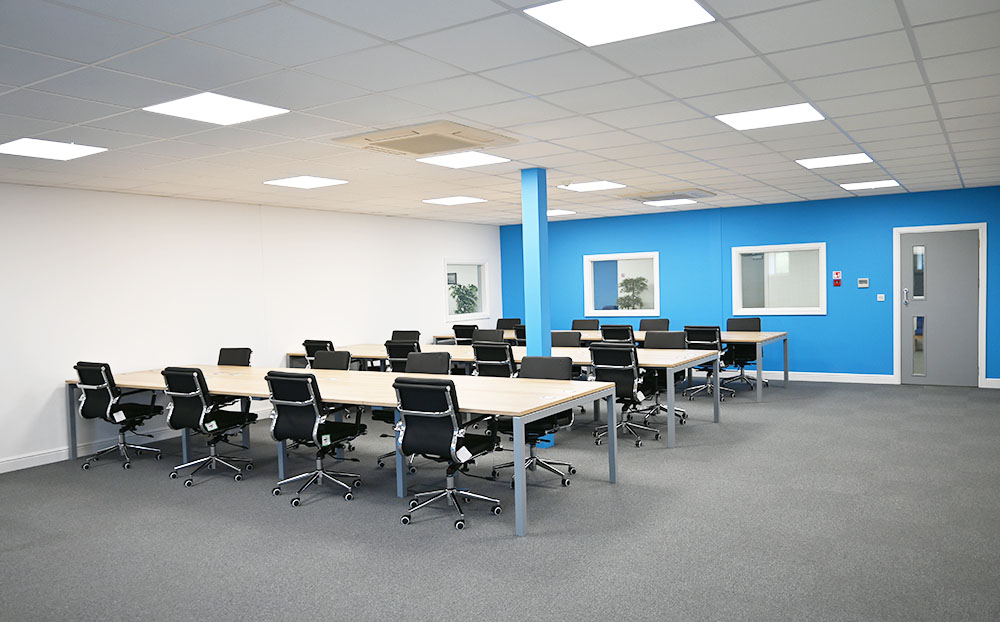
If your office was gone tomorrow, what’s your plan?

Most organisations believe they are prepared for disruption because they have backup systems and disaster recovery plans in place.

But these plans often focus on technology.

They overlook one critical factor:

People.

Because if your office becomes unavailable, your ability to operate depends on far more than your servers.


The Overlooked Risk in Business Continuity

Disaster recovery strategies traditionally prioritise:

  • Data protection
  • System recovery
  • Infrastructure resilience

These are essential.

But they only address part of the problem.

If your physical workspace is unavailable due to:

  • Fire
  • Flood
  • Power failure
  • Access restrictions
  • Security incidents

Your systems may still be recoverable.

Your business, however, may not be operational.


What Happens When the Workplace Is Lost

When an office becomes unavailable, disruption spreads quickly:

Staff Displacement

Employees have no designated place to work, leading to immediate productivity loss.

Access Challenges

Even if systems are available, secure access may be limited or unavailable without proper planning.

Communication Breakdown

Telephony systems, internal communication tools, and customer contact channels may be disrupted.

Operational Delays

Without clear processes, decision making slows and confusion increases.

This creates a situation where systems may be functional, but the business cannot operate effectively.


Why Traditional DR Plans Fall Short

Many disaster recovery plans assume:

  • Staff can work remotely without issue
  • Systems can be accessed securely from anywhere
  • Communication channels will remain available

In practice, these assumptions often fail.

Remote working may not be suitable for all roles.
Security controls may restrict access.
Infrastructure may not support sudden demand.

Without structured planning, recovery becomes fragmented and slow.


What Workplace Recovery Actually Requires

A complete workplace recovery strategy ensures that people can continue working, even when the primary office is unavailable.

This includes:

1. Alternative Workspace

Pre-arranged, fully equipped environments where staff can operate immediately.

2. Secure Access to Systems

Reliable, secure connectivity to critical applications and data.

3. Telephony and Communication Continuity

Ensuring calls, emails, and internal communications remain operational.

4. Defined Recovery Processes

Clear instructions on where staff go, what they do, and how operations continue.

5. Scalability

The ability to support a large number of users simultaneously under emergency conditions.


Integration with Disaster Recovery

Workplace recovery should not exist in isolation.

It must be integrated with your wider disaster recovery strategy:

  • Systems must be available where staff relocate
  • Access must be secure and controlled
  • Processes must align across IT and operations

Without this integration, recovery efforts become disconnected.


The Role of Your IT Partner

Delivering effective workplace recovery requires more than internal planning.

It requires an IT partner capable of providing:

  • Secure, resilient infrastructure
  • Rapid system availability
  • Physical recovery environments
  • End to end coordination

Many providers focus solely on data backup or system recovery.

Few provide the full capability required to keep a business operational.


Final Thought

Losing your office does not have to mean losing your business.

But without proper preparation, it often does.

Business continuity is not just about restoring systems.

It is about ensuring your organisation can continue to function under any circumstances.


If your workplace was unavailable tomorrow, would your business continue operating or come to a stop? Talk to us about Disaster Recovery and Business Continuity solutions for your business.
    Please prove you are human by selecting the star.

    system hacked

    Cyber Attacks Don’t Shut Down Systems. They Shut Down Businesses.

    When most organisations think about cyber attacks, they think about IT systems.

    Servers go offline.
    Files become inaccessible.
    Applications stop working.

    But that is only the surface level.

    The real impact of a cyber attack is not technical.
    It is operational.

    Because when your systems go down, your business goes with them.


    The Difference Between IT Impact and Business Impact

    An IT failure is measurable in systems.

    A business failure is measured in consequences.

    When a cyber attack hits, the immediate effects are rarely limited to infrastructure. Instead, the disruption spreads quickly across the organisation:

    • Revenue generation stops
    • Staff are unable to perform their roles
    • Customer services become unavailable
    • Internal communication breaks down

    What begins as a technical issue rapidly becomes a business-wide crisis.

    And the longer systems remain unavailable, the more severe the consequences become.


    The Hidden Cost of Downtime

    Many organisations underestimate the true cost of a cyber incident because they focus only on recovery of data.

    In reality, the most significant losses come from downtime:

    • Financial loss from halted operations
    • Customer attrition due to lack of service
    • Reputational damage that can take years to repair
    • Regulatory exposure in sectors with compliance obligations

    In some cases, businesses recover their data but never fully recover their position in the market.


    Why Prevention Alone Is Not Enough

    Cybersecurity tools are essential.

    Firewalls, endpoint protection, monitoring systems, and user training all play a critical role in reducing risk.

    However, no environment is completely immune.

    Attack methods evolve constantly.
    Human error cannot be eliminated.
    Supply chain vulnerabilities introduce external risk.

    The question is no longer:

    “Can we prevent an attack entirely?”

    It is:

    “What happens when something gets through?”

    This is where many organisations fall short.

    They invest heavily in prevention but give far less attention to resilience and recovery.


    Backup Is Not Business Continuity

    A common misconception is that having backups is enough.

    Backups protect data.

    They do not restore operations.

    After a cyber attack, recovery involves far more than retrieving files:

    • Infrastructure may need to be rebuilt
    • Systems must be validated and secured before going live
    • Dependencies between applications must be re-established
    • Users need safe and controlled access

    This process can take hours, days, or longer without the right preparation.

    During that time, the business remains effectively offline.


    The Importance of a Complete Disaster Recovery Strategy

    A true disaster recovery approach goes beyond backup.

    It ensures that your business can continue operating, even during a major disruption.

    This requires:

    1. Secure, Replicated Infrastructure

    Not just stored data, but ready-to-run environments that can be activated quickly.

    2. Defined Recovery Processes

    Clear, structured procedures that are understood by both technical teams and business stakeholders.

    3. Rapid Failover Capability

    The ability to switch operations to a secondary environment with minimal delay.

    4. Workplace Recovery

    Ensuring staff have access to systems, communication tools, and a place to work if the primary office is unavailable.

    5. Regular Testing

    Simulating real-world scenarios to validate that recovery works under pressure.

    Without these elements, recovery becomes slow, uncertain, and risky.


    Why Your IT Partner Matters More Than Ever

    One of the most critical decisions an organisation makes is choosing the right IT partner.

    Not all providers approach security and disaster recovery in the same way.

    Many focus on:

    • Basic backup solutions
    • Reactive support
    • General IT services

    But in today’s threat landscape, that is not enough.

    You need an IT partner that is:

    Security First

    Actively focused on protecting your environment, not just maintaining it.

    Proactive, Not Reactive

    Identifying risks and weaknesses before they become incidents.

    Experienced in Real Recovery Scenarios

    Understanding what actually happens during a crisis, not just what should happen in theory.

    Able to Deliver End-to-End Disaster Recovery

    Providing complete solutions that include infrastructure, failover, and workplace recovery, not just data backup.

    Because when an incident occurs, your IT provider is not just supporting systems.

    They are supporting your ability to operate as a business.


    From IT Recovery to Business Continuity

    The organisations that recover quickly from cyber attacks are not necessarily those with the most advanced technology.

    They are the ones with the most complete strategy.

    They understand that:

    • Recovery is about people as well as systems
    • Speed is as important as security
    • Preparation is more valuable than documentation

    Most importantly, they treat disaster recovery as a core business function, not an IT afterthought.


    Final Thought

    Cyber attacks do not just disrupt infrastructure.

    They disrupt operations, revenue, and trust.

    And in many cases, it is not the attack itself that causes the greatest damage.

    It is the inability to recover quickly and effectively.


    If your current strategy is focused mainly on backup, it may be worth reassessing your level of risk.

    Ask yourself:

    If your systems went down today, how much of your business would still be operational?
    Speak to us to discuss a complete DR plan today

      Please prove you are human by selecting the cup.

      backup

      Your Backup Is Potentially Useless. Here’s Why.

      Most organisations believe they are protected because they have backups in place.

      They tick the box.
      They pass audits.
      They assume they are covered.

      But in reality, backups alone do not protect your business.

      They protect your data.

      And those are not the same thing.


      The Misconception: Backup = Recovery

      A backup strategy answers one question:

      “Can we retrieve our data?”

      But business continuity depends on a completely different question:

      “How quickly can we operate again?”

      That gap between data recovery and operational recovery is where most failures happen.


      What Actually Happens During an Incident

      Let’s take a realistic scenario:

      A ransomware attack encrypts your systems at 09:00.

      You have backups. Good.

      Now what?

      Step 1: Identify the breach

      Hours can pass before the full scope is understood.

      Step 2: Isolate affected systems

      You cannot restore safely until the threat is contained.

      Step 3: Validate backups

      Are they clean? Are they recent? Are they complete?

      Step 4: Begin restoration

      This is where most assumptions break.

      Large datasets take hours or days to restore
      Infrastructure must be rebuilt or reconfigured
      Dependencies between systems cause delays

      Step 5: Test systems

      You cannot bring systems live without validation.

      Step 6: Restore user access

      Staff still need:
      Devices
      Network access
      Applications
      Secure authentication

      At this point, even with good backups, many businesses are still offline for days.


      The Real Problem: Recovery Time

      This is where two critical metrics come into play:

      Recovery Time Objective (RTO)

      How long it takes to restore operations.

      Recovery Point Objective (RPO)

      How much data you can afford to lose.

      Most organisations focus heavily on RPO, which relates to backups.

      But it is RTO that determines whether your business survives.

      Because:

      A 24 hour outage means lost revenue
      A 72 hour outage means lost customers
      A week long outage can mean potential business failure


      Why Backups Fail in Practice

      Backups do not fail because they do not exist.

      They fail because they are incomplete as a strategy.

      1. No Infrastructure to Recover Into

      Backups need a target environment.

      Without:
      Pre configured servers
      Network infrastructure
      Security controls

      You are rebuilding from scratch.


      2. No Defined Failover Process

      Most organisations do not have a clear, tested sequence for switching operations.

      Instead, recovery becomes:
      Reactive
      Manual
      Slow


      3. No Workplace Recovery Plan

      Even if systems are restored:

      Where do staff work?
      How do they access systems?
      What happens if the office is unavailable?

      This is one of the most overlooked risks.


      4. No Testing Under Real Conditions

      A backup that has never been tested is a theoretical solution.

      Under pressure:
      Scripts fail
      Dependencies break
      Teams do not know their roles

      Testing exposes reality.

      Most organisations avoid it.


      What Real Business Continuity Looks Like

      A proper strategy goes far beyond backup.

      It includes:

      1. Replicated Infrastructure

      Not just stored data, but ready to run environments.

      2. Defined Recovery Processes

      Clear, documented, and rehearsed.

      3. Rapid Failover Capability

      The ability to switch operations in minutes, not days.

      4. Workplace Recovery

      Ensuring people, not just systems, can function.

      5. Regular Testing

      Simulating real world failure scenarios.


      Backup Is One Piece of a Larger System

      Backups are still essential.

      But they are just one component in a broader resilience strategy.

      Without the surrounding infrastructure and planning, they create a false sense of security.


      The Question Most Businesses Avoid

      It is easy to ask:

      “Do we have backups?”

      It is much harder, and more important, to ask:

      “How long could we realistically operate without our systems?”

      Because that answer defines your actual level of risk.


      Final Thought

      Technology failures do not usually destroy businesses.

      Downtime does.

      And downtime is not solved by backups alone.


      If you have never tested your recovery under real conditions, you do not truly know your risk.

      It might be worth asking:

      How long could your business actually survive offline?
      Talk to us about real world backup and recovery.

        Please prove you are human by selecting the heart.

        1ad6bdec 9693 4526 a58e eb9794d3ff40

        Unlocking the Future: DSM Group’s Current Solutions and Upcoming Expansion in 2025

        As we step into 2025, DSM Group is excited to share our journey of innovation, sustainability, and growth. With a strong foundation built on cutting-edge technology and exceptional service, we’re poised to make this year one of transformative advancements. Here’s a look at our current offerings and a glimpse into our ambitious expansion plans for the future.

        Current Solutions: Elevating Standards in Colocation and Beyond

        At DSM Group, we are proud to offer a suite of solutions designed to meet the diverse needs of modern businesses:

        1. Colocation Services:
        Our colocation solutions provide businesses with secure, scalable, and sustainable infrastructure to host critical IT operations. Located within a state-of-the-art facility, our services ensure:

        • Unparalleled uptime with resilient power and cooling systems.
        • Enhanced security with 24/7 monitoring and biometric access.
        • Cost efficiency through shared resources.

        2. Workplace Recovery Services:
        With the unpredictability of today’s world, our workplace recovery services guarantee uninterrupted business operations. Offering 400 fully equipped recovery positions, four bespoke suites, an 18-seat executive boardroom, and a 50-seat conferencing suite, we ensure businesses are back up and running in no time.

        3. ESG-Focused Hosting:
        As one of the UK’s leading ESG colocation providers, our onsite cooling lake, water-cooled racks, and 200kW solar farm underscore our commitment to sustainability. These features, alongside our nature reserve, help reduce environmental impact while delivering robust and efficient hosting solutions.

        4. Data Backup and Storage:
        Our comprehensive data backup services safeguard critical business information, ensuring peace of mind and operational continuity. With advanced security measures and seamless recovery processes, your data is always protected.

        The Benefits of Partnering with DSM Group

        When you choose DSM Group, you’re not just selecting a service provider—you’re investing in a partnership built on:

        • Reliability: Our ISO27001:2022 certification exemplifies our dedication to the highest standards of information security.
        • Sustainability: From solar energy to water-efficient cooling, our solutions align with your ESG goals.
        • Proximity: With excellent transport links to London and surrounding areas, accessing our facility is quick and convenient.
        • Expertise: Our experienced team, including the key contributors who led our early recertification success, ensures your business receives unparalleled support.

        The Road Ahead: Expansion Plans for 2025

        The upcoming year marks the beginning of an exciting second phase of development at our Eco Data Centre. Starting in 2025, we will:

        • Double Our Capacity: By expanding our colocation spaces, we aim to accommodate growing demand while maintaining the highest standards of service and efficiency.
        • Enhance Sustainability Features: The second phase will include additional renewable energy projects, further reducing our carbon footprint and reinforcing our position as an ESG leader.
        • Develop the Nature Reserve: Building on our commitment to biodiversity, the nature reserve will feature new habitats, educational opportunities, and community engagement activities.
        • Introduce Advanced Services: With the expansion, we plan to integrate advanced technologies such as AI-driven monitoring and next-generation cooling systems.

        A Shared Vision for a Sustainable Future

        At DSM Group, our mission has always been to create a harmonious balance between technological excellence and environmental stewardship. The planned expansion is not just about growing our capacity—it’s about reaffirming our commitment to our clients, our community, and the planet.

        As we move forward into this new chapter, we invite you to join us on this journey. Together, we can shape a future where innovation and sustainability go hand in hand.

        Stay tuned for updates as we embark on this exciting phase of growth. For more information about our current solutions or to discuss how we can support your business, contact us today!

        hawkernew

        Navigating the Post-COVID Workplace: Resurgence, Downsizing, and the Importance of Unity

        As organisations worldwide navigate the complexities of the post-COVID era, the workplace is undergoing a profound transformation. While there is a resurgence in workplace recovery initiatives, fuelled by a renewed emphasis on employee well-being and flexibility, some companies are downsizing due to the widespread adoption of remote and hybrid work models. Simultaneously, there is a heightened recognition of the importance of a cohesive team presence, particularly in emergency scenarios.

        The Impact of Remote Work and Downsizing:

        1. Downsizing in the Wake of Remote Work:
          • The widespread success of remote work during the pandemic has led some organisations to reevaluate their physical office spaces. In a bid to cut costs and adapt to evolving work preferences, companies are downsizing office footprints, embracing fully remote models, or adopting hybrid work arrangements.
        2. Shifts in Company Culture:
          • The shift to remote and hybrid work has necessitated a reevaluation of company culture. Organisations are exploring innovative ways to foster a sense of belonging and collaboration among team members who may be physically dispersed.
        3. Challenges of Downsizing:
          • While downsizing may bring financial benefits, it also poses challenges such as maintaining team cohesion, preserving corporate culture, and ensuring effective communication in virtual environments.

        The Role of Physical Presence in Emergency Scenarios:

        1. Emergency Preparedness and Unity:
          • One of the lessons learned from the pandemic is the importance of team unity in emergency scenarios. While remote work has proven its viability, certain situations may require a collective, on-site response. Organisations are recognising the need to strike a balance between remote flexibility and the importance of having a team physically present when urgent situations arise.
        2. Hybrid Models for Emergency Response:
          • Some companies are adopting hybrid models that combine remote flexibility with periodic in-person gatherings to enhance team cohesion. This approach ensures that teams are well-prepared to respond effectively to emergencies, leveraging the benefits of both remote and in-person collaboration.

        Conclusion:

        The post-COVID workplace landscape is complex, with organisations simultaneously embracing remote work, downsizing physical office spaces, and recognising the importance of a united team presence in emergency scenarios. Striking the right balance between flexibility and cohesion is key to navigating these challenges successfully. As workplace recovery initiatives evolve, companies must remain agile, adapting their strategies to the dynamic needs of the workforce and the demands of an ever-changing business environment.